Sign Up For Our eNewsletter
Get the latest news, happenings & more from the Chelan-Douglas Land Trust.


Forty for Forty: Dreary (and Muddy) November
by Andy Dappen
November. It’s rightly called a ‘shoulder season’ as our normally sunny weather turns it back on us, delivering the cold shoulder of gray skies, drizzle, and short days. After the warmth of summer but before the arrival of winter snow, it’s a time of gloom and doom.
It’s hard to get inspired to bundle up and grab a raincoat or a headlamp to get outside, but doing so does a body a world of good in quelling both the blues and the blahs. The science behind this may be vague, but scores of personal stories affirm that filling the lungs with fresh air, getting the limbs and body moving, and filling the eyes with natural sights and light make a world of difference in rebooting one’s mood and in putting a positive spin on the day… or the month.
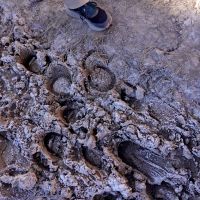
Besides mustering motivation, the other problem awaiting those wishing to get outside to battle the November blues? Mud. The fine grain soils composing our foothills trails do not facilitate the quick drainage of rain so our local paths easily develop a skin of mud. When walked (or ridden) through the resulting boot prints (or wheel ruts) damage the trails by accelerating erosion. Use of trails throughout most of the foothills are a public privilege, not a public right, so using these trails in ways that cause no harm is important if we don’t wish to endanger the privilege we’ve been offered by landowners.
A general guideline to ensure you’re falling into the camp of responsible users is to only travel trails when your prints (boot prints, horse prints or tire prints) are less than a ¼-inch deep. Meanwhile, puddles on a trail should either be hopped over or walked through, not walked around – a practice that kills additional vegetation beside the trail and widens the tread. If the trail is so puddled that you don’t want to return home with filthy boots and sodden feet, it’s a sign you shouldn’t be using that trail.
Sadly, many people who arrive at a trailhead and find the trail muddy have committed to that outing and walk the trail anyway, leaving their prints behind as evidence of their poor etiquette. Don’t be that user. If it has been raining or drizzling, expect that it will take several days of fair weather before the dirt trails of Castle Rock, Sage Hills, Horse Lake Reserve, Cashmere Canyons Preserve, Jacobson Preserve, or others have dried adequately. Instead, pick an alternate location where you know your passage will go unnoticed.
A number of graveled roads and trails in the area allow for an unnoticed, damage-free, and guilt-free outing. These routes include the main graveled road leading up Dry Gulch to the top of the earthen dam and the run-off reservoir behind that dam, the Main Saddle Rock Trail (staying only on the graveled trail/road leading to the pass between the area’s north and south sides), and the dirt/gravel portion of Horse Lake Road.
The strategies of dealing with this bloody, muddy month are twofold. First is to fight the personal temptation to hibernate indoors until spring -- the evidence from those who remain active outdoors suggests that if you just keep-on-keeping-on, you’ll stop cursing this grayer, colder, wetter month and come to enjoy it. Second is to take much greater care in picking the places you’ll visit--the evidence of your passing should not have the public cursing you for the damage you’ve inflicted upon the trails we all share.
Details. Enjoying Muddy November
Where. If it has rained in the past several days, gravel roads and trails are the best options for getting outdoors without causing damage to dirt trails. On the southwestern end of Wenatchee, the trailhead at the end of Circle Street offers two excellent mud-free outings: 1) Walk the graveled Main Dry Gulch Trail to the top of earthen dam on the property (2.8 miles roundtrip), 2) Walk (or ride) the Main Saddle Rock Trail to the top of the Saddle Rock Natural Area (3 miles round trip). On the northwestern end of Wenatchee, the gravel portion of Horse Lake Road (starting from the pullout at the end of the paved portion of the road and ending at the gate blocking the road at the Horse Lake Reserve) provides a quiet and scenic country-road outing (5 miles round trip). Near Leavenworth, the lower roads at the Ski Hill or the dirt roads on the Land Trust’s Mountain Home Ridge property are suitable November destinations before snow arrives. Also during mud season but before the arrival of snow, consider walking portions of nearby Forest Service roads. Several options include the gravel road up Twin Peaks (8 miles roundtrip from the end of pavement up Number Two Canyon Road), the gravel road up Tibbetts Mountain (5.75 miles roundtrip) accessed by driving 4.5 miles up Olalla Canyon, and the graveled King Creek Road up to Peak 3,842 (5 miles roundtrip) accessed from the pullout at Milepost 173 off Highway 97 on the way to Blewett Pass.
When. The options mentioned above can be accessed, rain or shine, without worry about trail damage. For dirt trails, give them several days to dry after a rain and stay off them if you’re leaving prints (or ruts) deeper than ¼-deep. One other strategy to adopt if you want to walk dirt trails in November is to use trails on north-facing slopes early in the morning after a night that delivered freezing temperatures. Boots will not leave tracks in frozen ground -- just plan to be off the trails before they thaw.
Extra Gear. A few items of added gear make a big difference in making November outings both enjoyable and safe. Don a warmth layer (puffy coat, ski hat, thin gloves) at the start of your outing. Carry a small daypack to pack your warmth layer once you heat up and to carry either a lightweight raincoat or packable umbrella in case of rain. Also carry a reliable headlight or flashlight (and a spare set of batteries) if you’re heading out early in the morning or late in the afternoon. Finally, carry MicroSpikes and, perhaps, trekking poles if the trail/road you’re walking might be snowy or icy.
Land Ownership. Many of the trail systems in our local foothills are either owned or maintained by the Chelan-Douglas Land Trust (CDLT). The assistance of all trail users is needed to keep these trails available to the public and in good shape. The practices and routes mentioned in this article help ensure this.
Andy Dappen is a former board member of the Chelan Douglas Land Trust who hopes those who use and enjoy Land Trust properties will join the organization ($50/year, cdlandtrust.org/support-us/become-member).
Forty for Forty. Recognizing the 40th Anniversary of the Chelan-Douglas Land Trust with 40 stories about places the CDLT has protected and kept open for public access.
Online Resource

Trail maps, directions, more info

40 Years of Conservation Success
