Sign Up For Our eNewsletter
Get the latest news, happenings & more from the Chelan-Douglas Land Trust.


Cheatgrass. Few plants can claim a more fitting name, and few are more hated by landowners and land managers in the West. New research suggests that while this noxious weed will most likely never be eradicated, it could soon be managed - and the Land Trust is using new tools to help our Foothills return to a more ecologically balanced state.

The presence of cheatgrass (Bromus tectorum) has historically been considered “a necessary evil to be reckoned with until kingdom come” in the words of conservationist and author Aldo Leopold. He wrote about the plant, already a major problem in the West, in the 1940’s.
Since its arrival in the late 1800s, it’s invaded every state and covers much of our land in Chelan and Douglas Counties. It lodges in our socks and in the fur, ears, and eyes of animals, it degrades hay and wheat fields, it outcompetes native plants, and it covers our foothills with a layer of tinder each June as it dries out and dies.
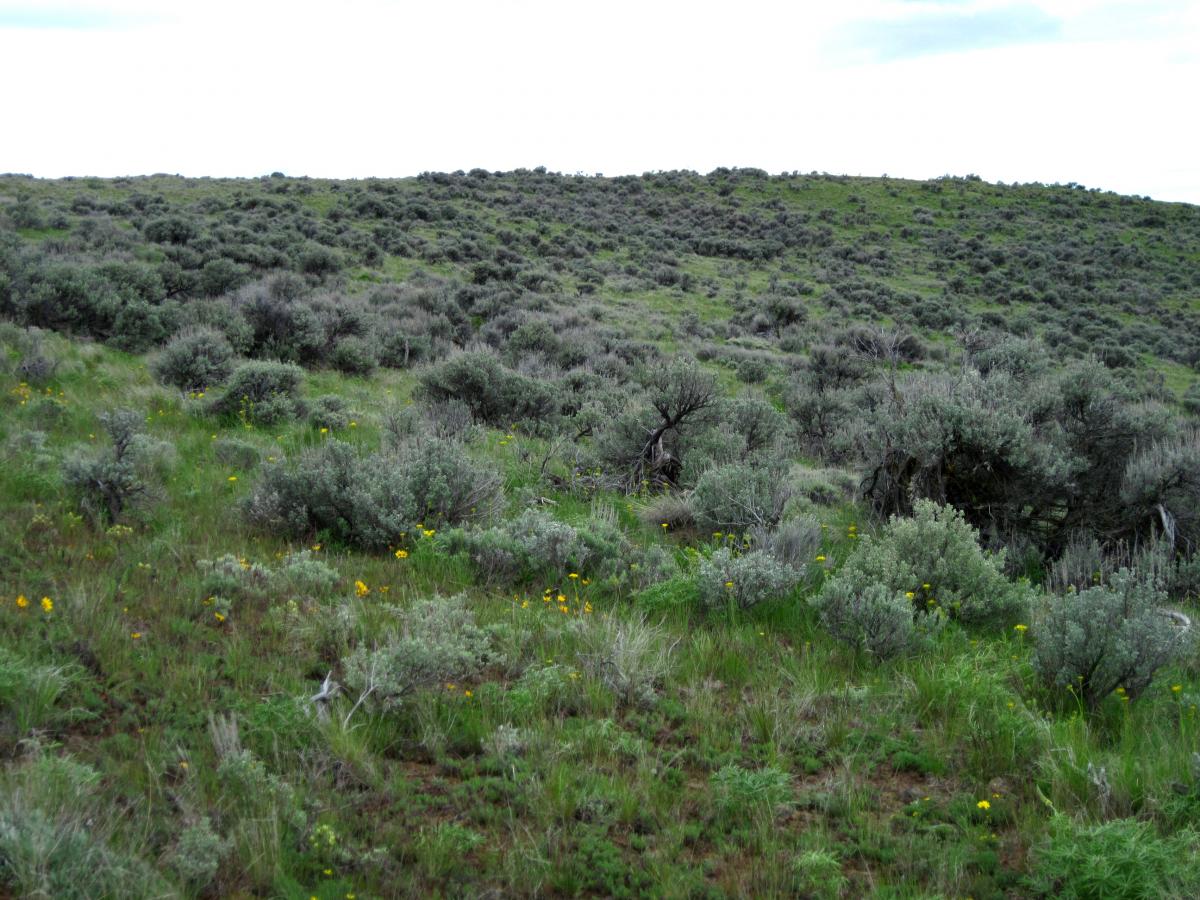
In their native state, bunchgrasses dot our foothills, separated by soil covered in a thin layer of fragile, but less flammable lichens, fungi, and bacteria – what we call a cryptobiotic soil crust. Wildflowers grow and bloom in the spring and fall, dying back in the summer. Patches of resinous and fire-prone sagebrush and bitterbrush are separated by plenty of space. Fire-adapted ponderosa pines begin to appear at higher elevations. When fires appear – naturally or historically started by Native Americans, who used fire as a management tool – they burn a few acres, hit a gap between grasses, and smolder out.
When cheatgrass arrived on the scene, it colonized places where humans (and especially our livestock) had disturbed that cryptobiotic soil crust, eventually filling in any less flammable gaps in soil cover. In places with cheatgrass today, the weed provides a bridge for fire to burn many acres. After fires, cheatgrass is able to colonize the burned land faster than many native species.
Thanks to Ann Kennedy, a soil scientist with the Agricultural Research Service of the USDA, this cycle may be broken. She and her team have studied soil bacteria for over 30 years to find a strain that will attack invasive grasses while leaving native species untouched.

Vigorous root growth is cheatgrass’s secret weapon. As a winter annual, cheatgrass sprouts during the fall rains developing extensive root systems. It lays dormant in the winter and then begins growing again early in the spring the following year – developing roots up to 30 inches deep. By the time our native plants begin growing each spring, cheatgrass has already taken advantage of its chilly head start, monopolizing water, light and nutrients.
In 1985, Ann Kennedy noticed a patch of yellowed wheat in eastern Washington State and realized that bacteria had caused the wheat to change its growth pattern – fewer shoots but larger wheat kernels. She wondered if she could find a kind of bacteria that could stunt the vigorous roots of invasive grasses.
She and her team tested over 25,000 types of bacteria native to the soil of Washington State to find one that hinders root growth. Eventually they found two strains of a bacterium called Pseudomonus flourescens that met their long list of criteria. These strains underwent many tests, including a field test at land owned by the Nature Conservancy at Moses Coulee. It’s been shown to reduce cheatgrass in test plots by half after three years, and to near zero plants after five or six years. It doesn’t affect native plants or animals, though it does also kill other invasive grasses – including jointed goatgrass (Aegilops cylindrica) and medusahead (Taeniatherum caput-medusae). The soil ecosystem returns to normal levels of the bacterium after just a few years. It costs only half to two thirds as much as herbicides – and, if successful the first time, only has to be applied once.
P. flourescens became available commercially in October 2016. The Land Trust is the first in Chelan or Douglas Counties to treat cheatgrass with the tool, according to Jerry Benson at BFI Native Seeds.
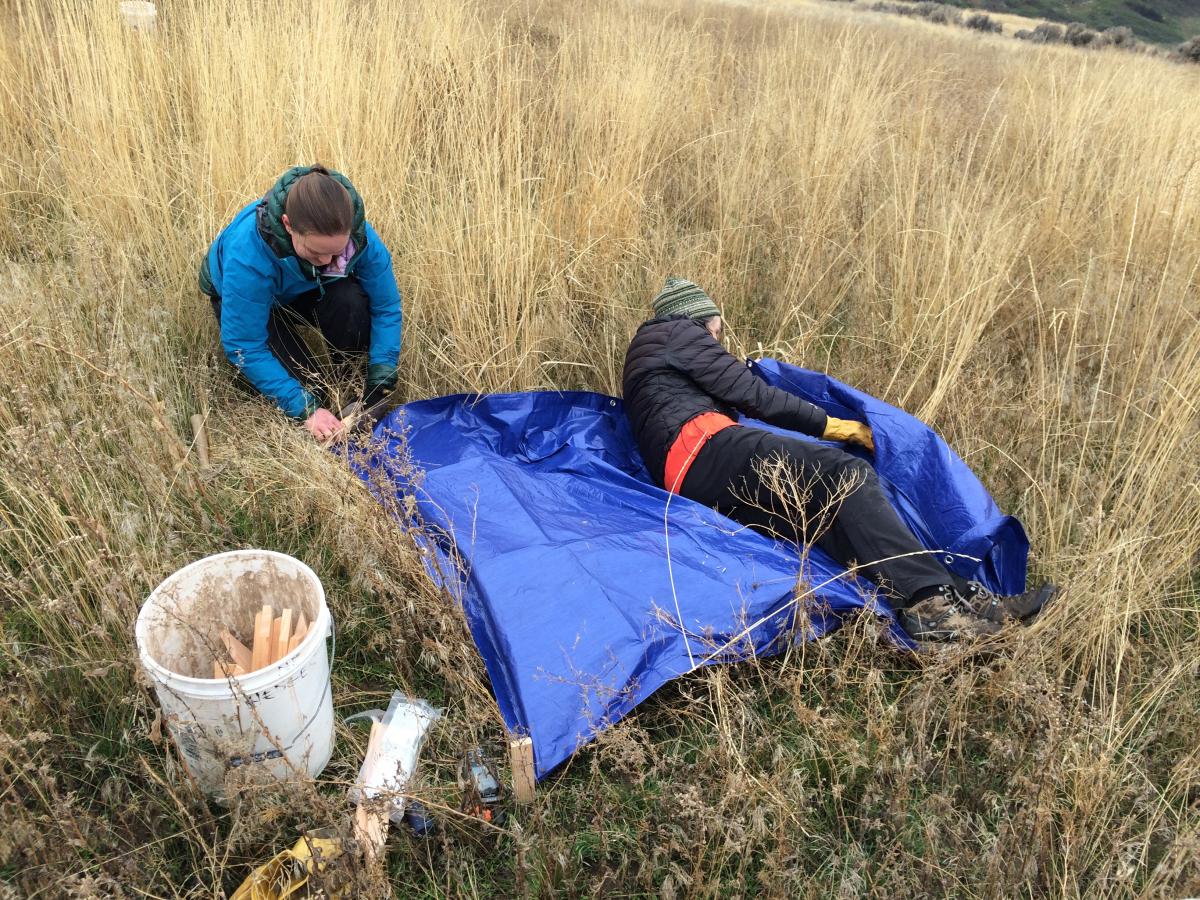
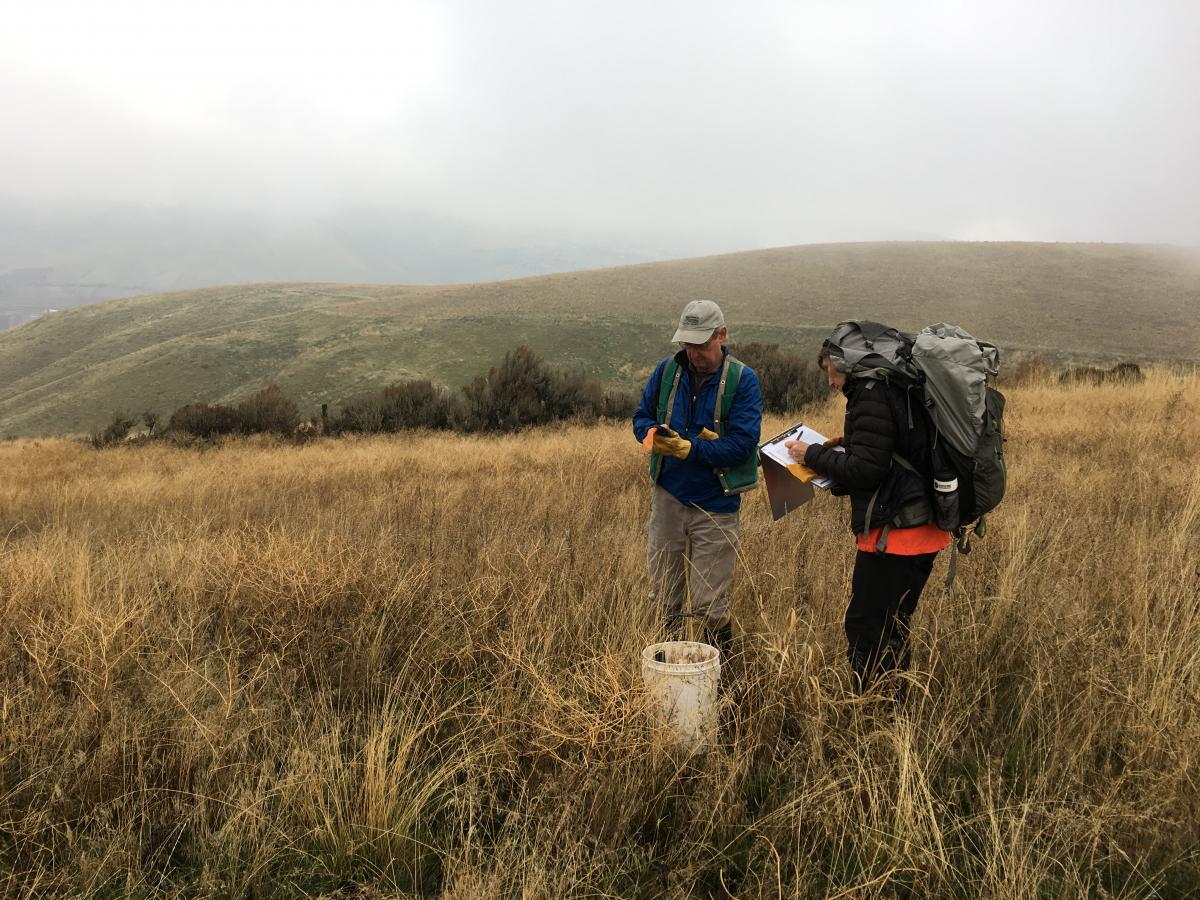
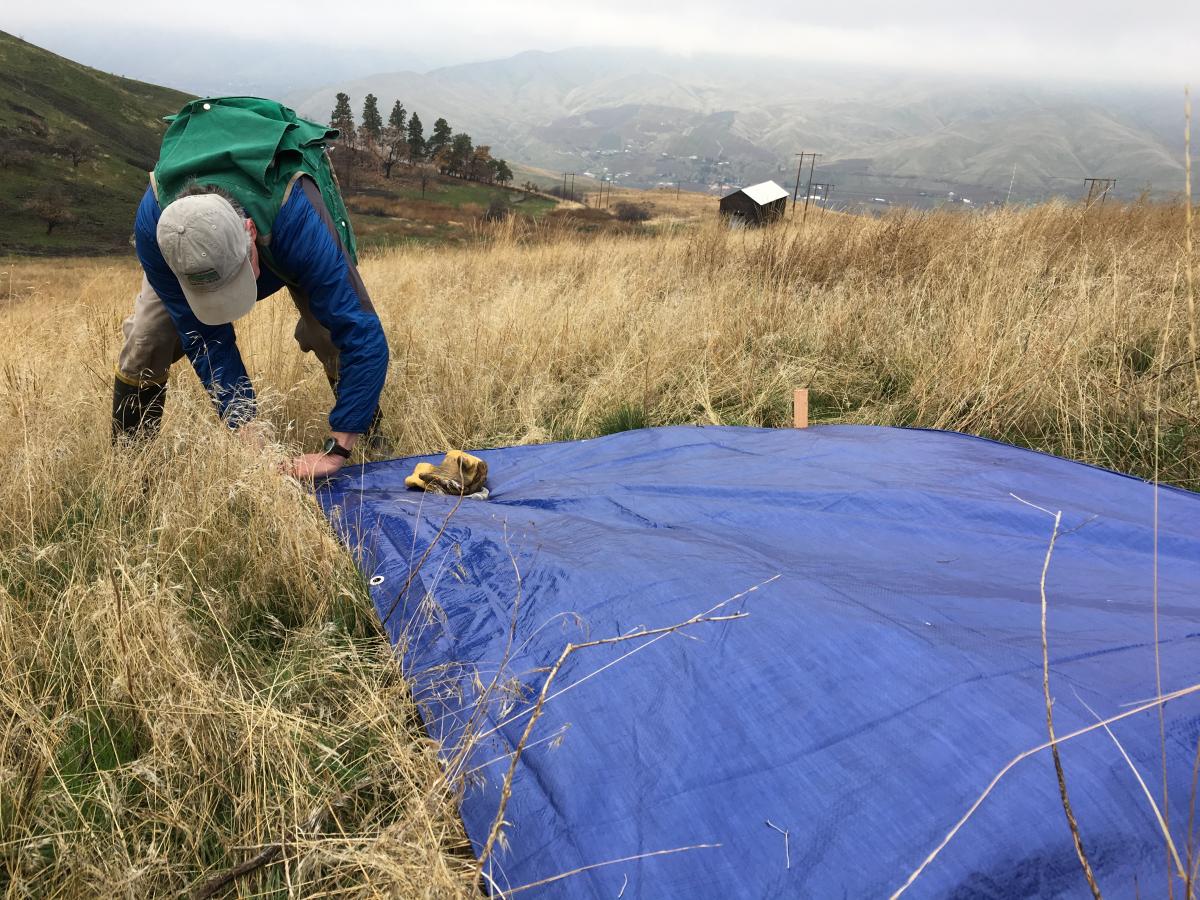
On the last day of November, I joined Neal Hedges, Stewardship Director, and Susan Ballinger, Conservation Fellow, at the Land Trust’s Horse Lake Reserve. Over the course of the morning, we staked down 20 small blue tarps spread out across the area of land to be treated.
We want to find out whether the treatment is effective by excluding small pieces of land from being sprayed with beneficial bacteria. The bacteria don’t travel laterally for the most part, Neal said. They mostly sink vertically into the soil, so covering patches with tarps should be an effective way of keeping the bacteria out of those sections. In a few years, if we see a marked difference in the presence of cheatgrass between the covered spots and the rest of the treatment area, we’ll be able to tell if the treatment worked.
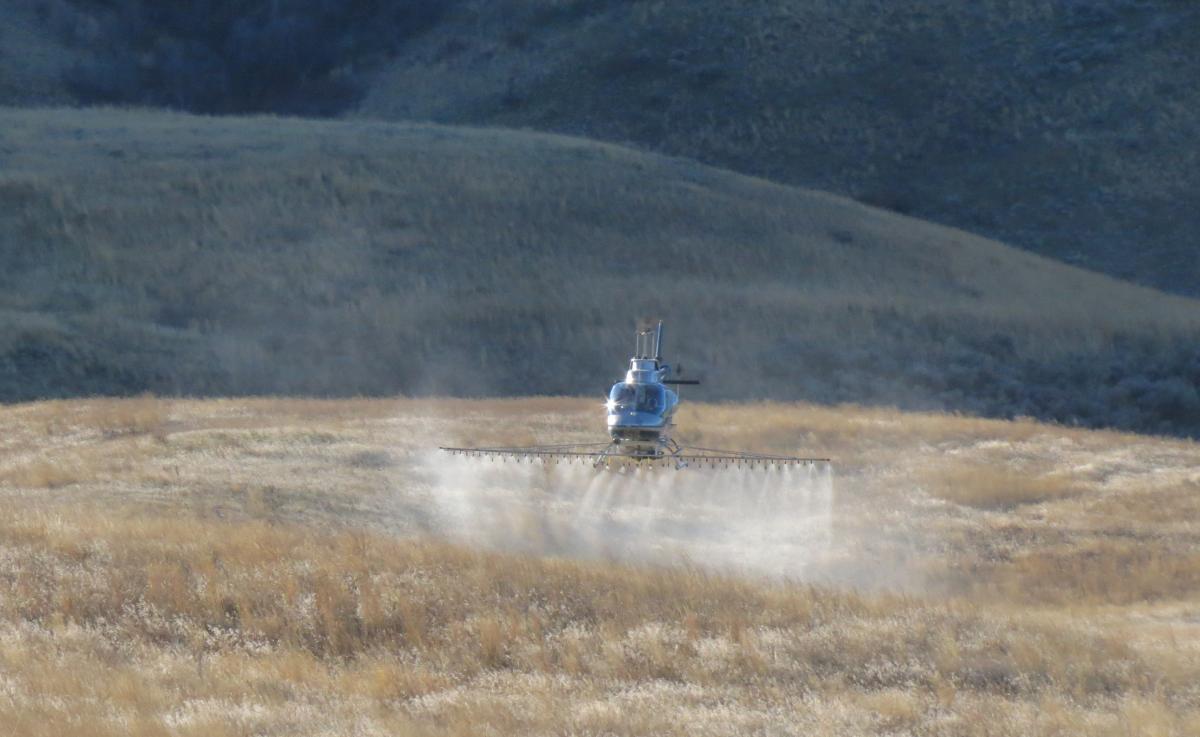
The next morning, a helicopter sprayed P. flourescens, which Neal described as looking “like murky water” on 130 acres of restoration fields near the old barns at Horse Lake Reserve. Conditions were just right for the application – below 50 degrees and with precipitation in the forecast. If temperatures are too warm and dry, the bacteria’s natural predators in the soil ecosystem will render the treatment less effective. Neal hopes that melting snow from this week’s storm will help the bacteria work its way into the soil.
If all goes well, in the next year, the bacteria will begin to attack the roots of cheatgrass plants. The researchers who developed the treatment say it could take up to 3 years before we start seeing changes in the amount of cheatgrass on the land.
In the long run, we probably won’t be able to treat all the land that needs it with P. flourescens. But, we could create fire breaks to slow the spread of wildfires, and the bacterium could give native plants the leg up they need to recover. With more native plants comes a more balanced ecosystem – and one that’s more able to defend itself from invasives like cheatgrass.
Online Resource

Trail maps, directions, more info

40 Years of Conservation Success
